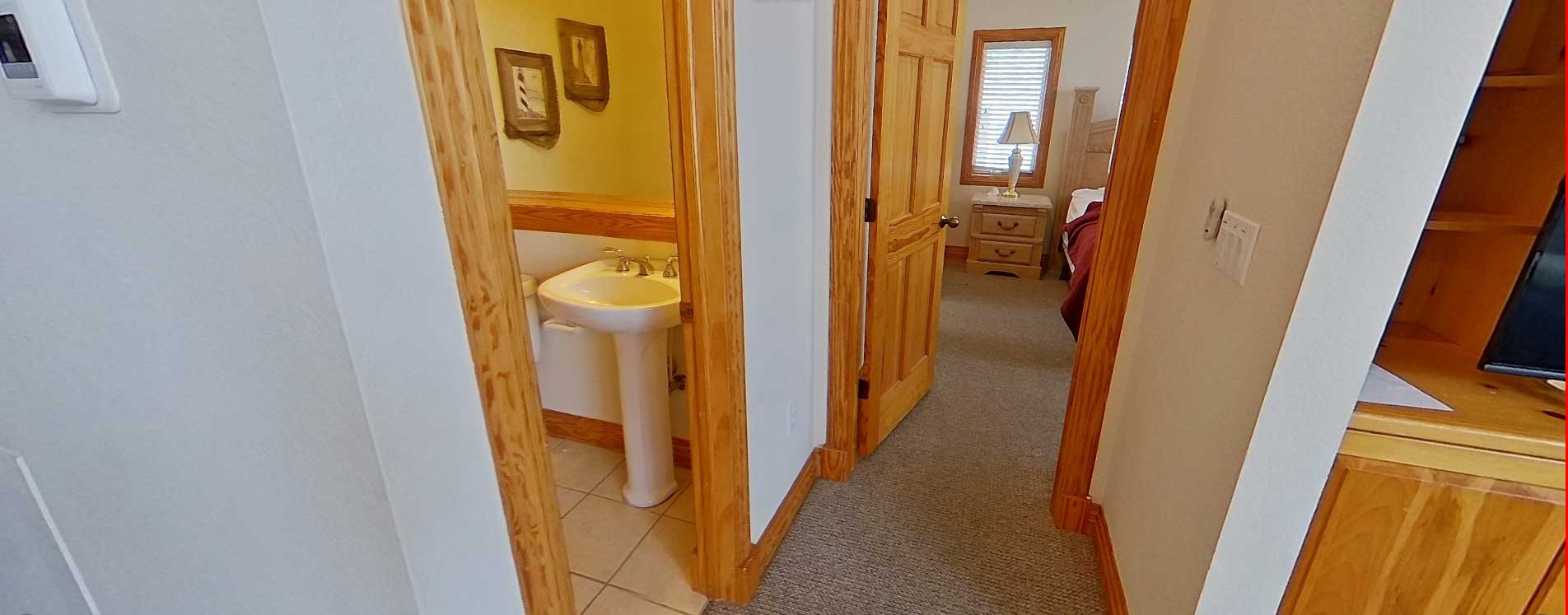
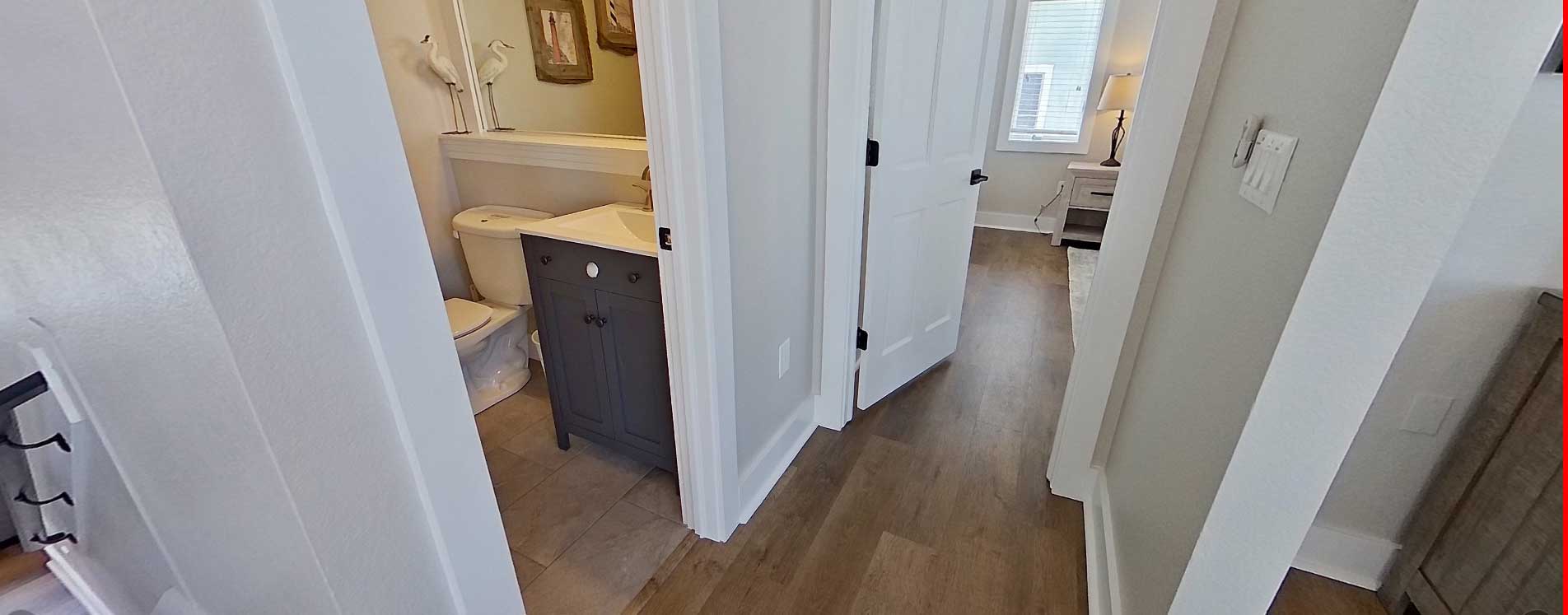
Many Outer Banks homeowners own properties that were built 10, 15, 20, or even 25 years ago. These homes often have excellent locations, good floor plans, strong rental histories, and valuable underlying potential. But over time, even well-built beach houses can begin to fall behind current guest expectations.
653 Juniper Berry in Corolla is a strong example of what can happen when an owner recognizes that potential and commits to a serious renovation plan.
Many Outer Banks homeowners own properties that were built 10, 15, 20, or even 25 years ago. These homes oBefore its transformation, the home had many strengths. It was located in Ocean Sands Section O, just 189 yards from beach access. It had seven bedrooms, multiple bathrooms, outdoor amenities, and the size needed to serve large vacation groups. But like many older beach houses, the property needed more than small updates to remain competitive in a changing vacation rental market.
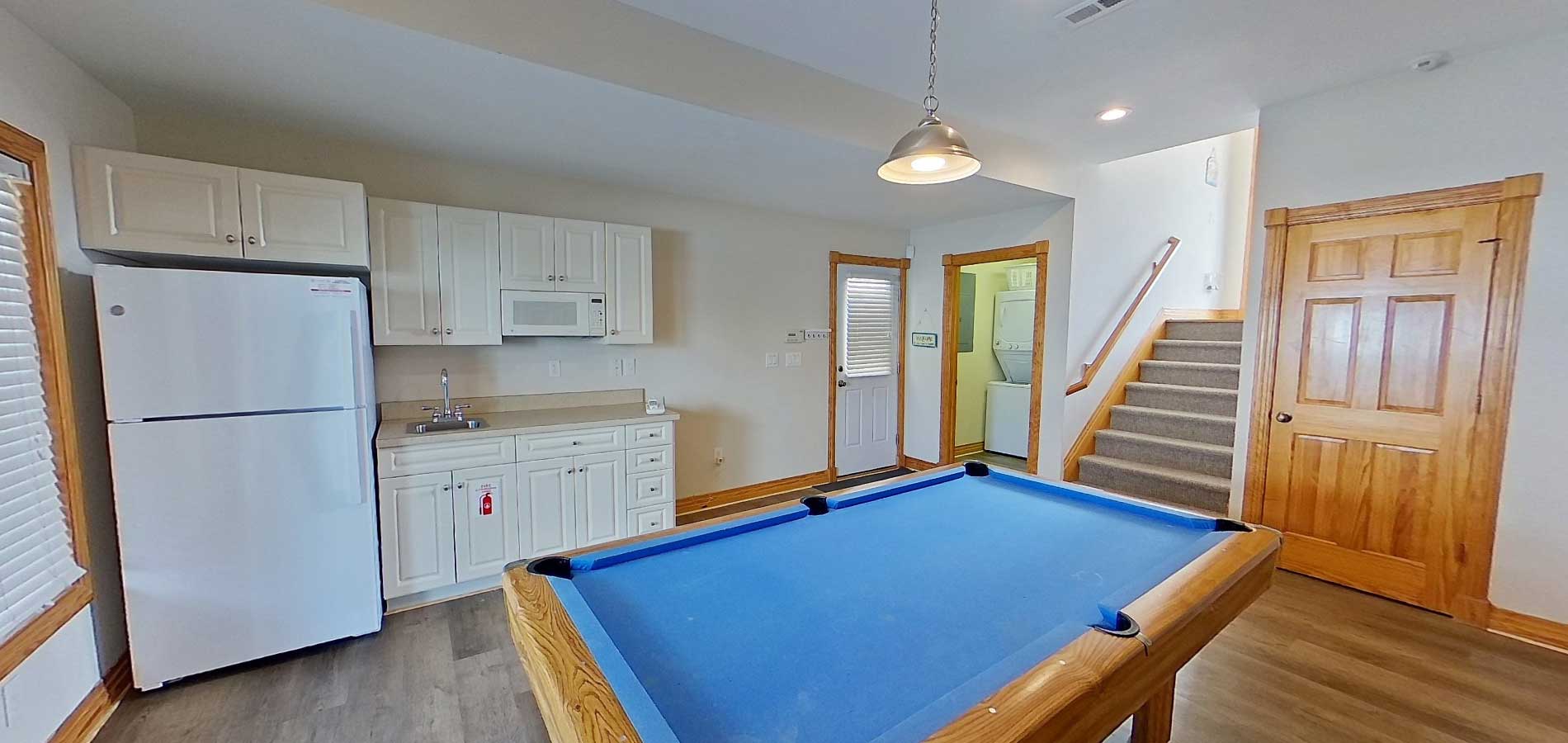
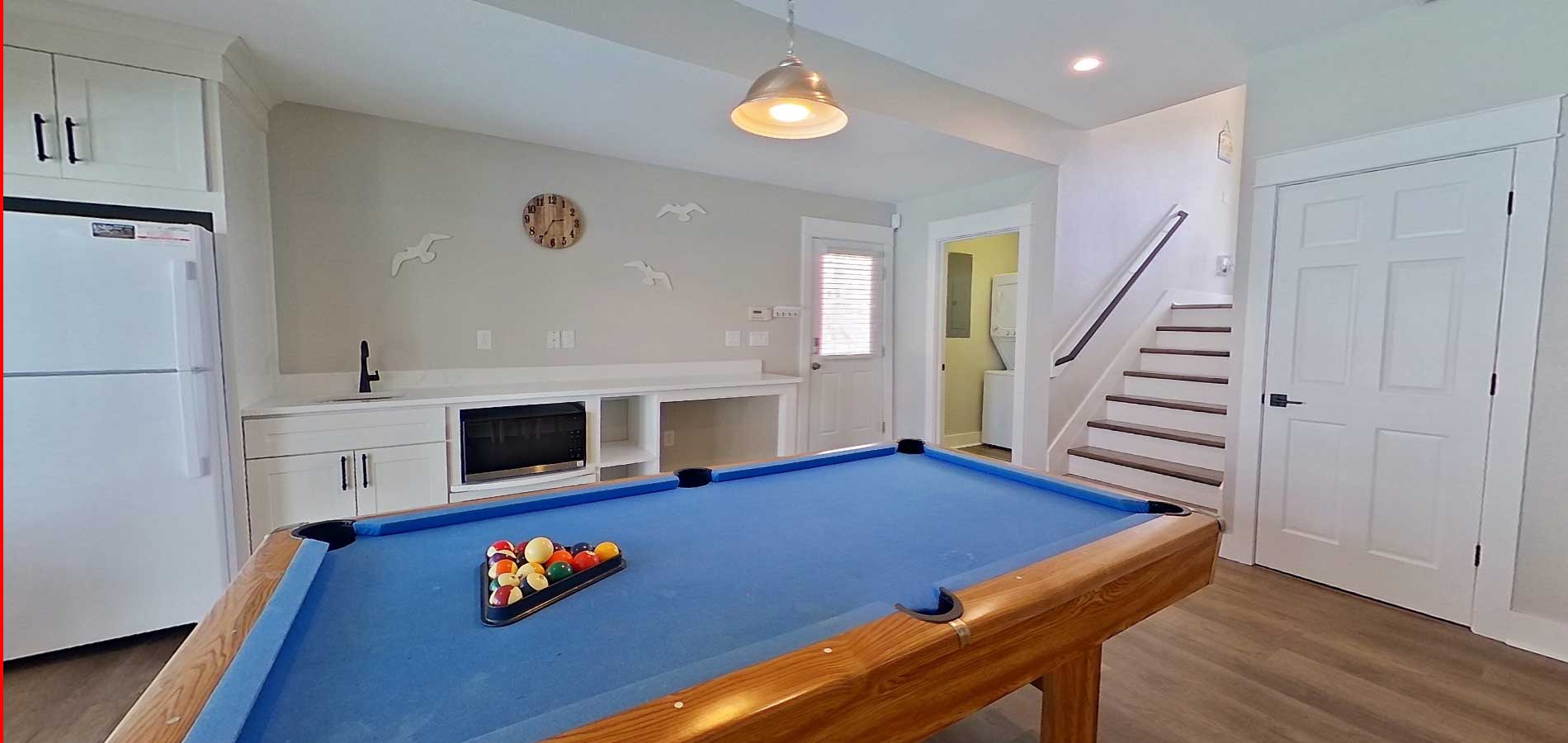
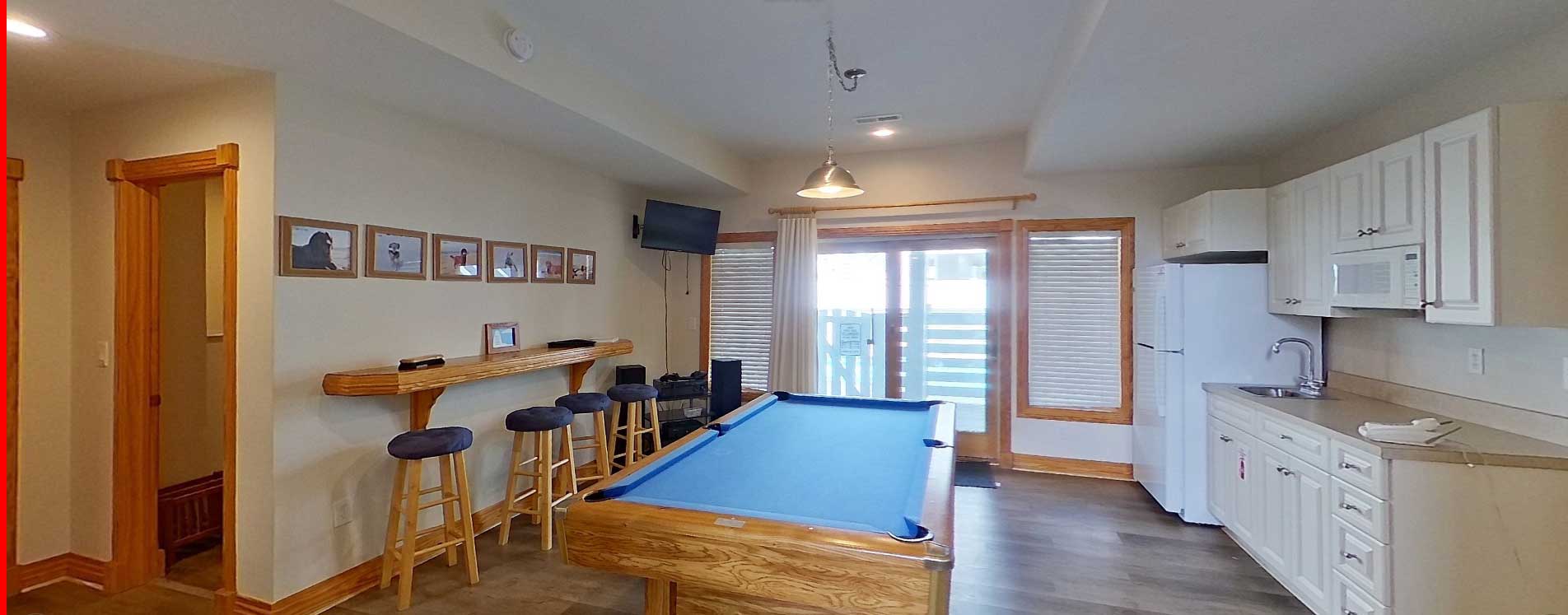
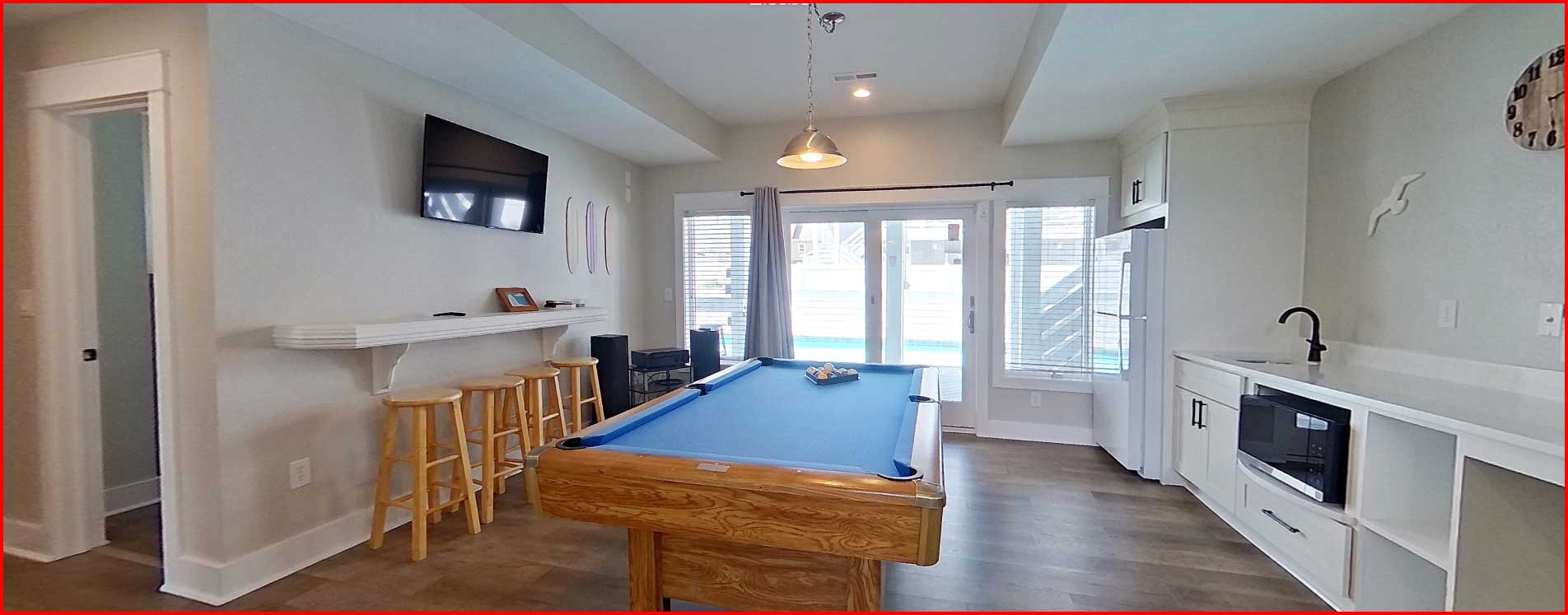
Heavy oak trim, dated framed photos, and a dim stairwell once boxed in this pool-table room. The renovation opened it up with bright white millwork, durable new flooring, and a cleaner sightline to the staircase – a space now built to handle rental-season wear without losing its polish.
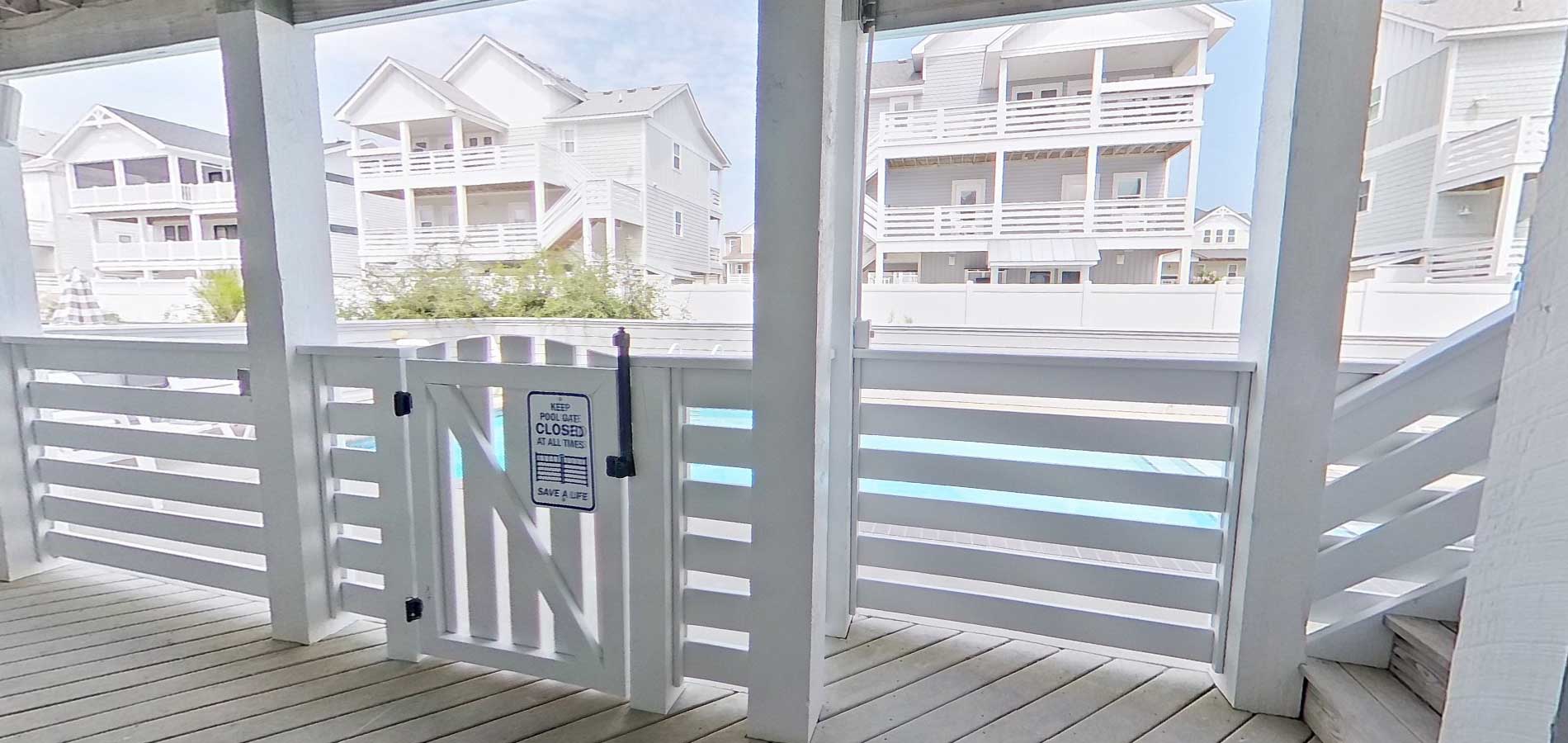
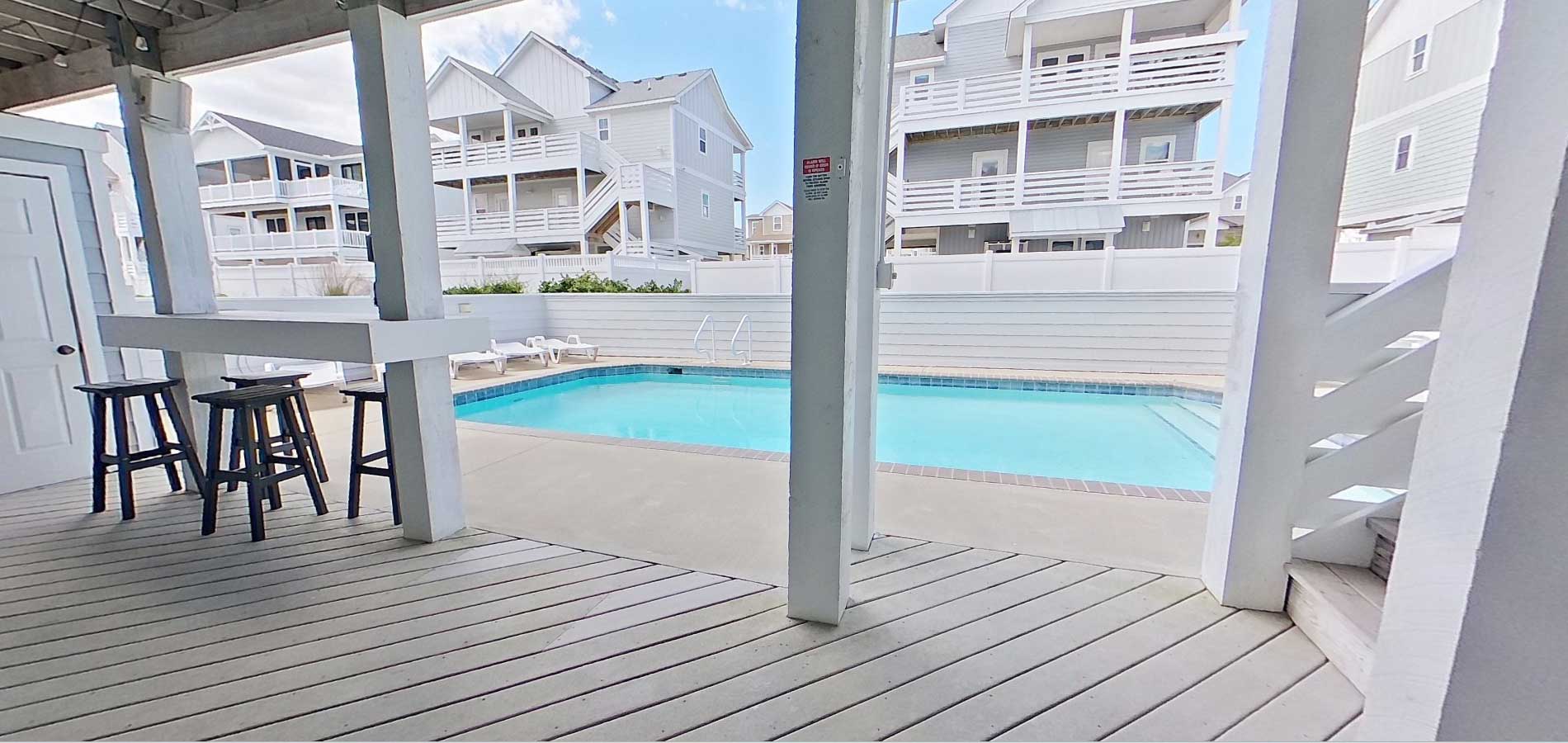
Weathered decking, an aging pool shell, and worn outdoor showers reflected two decades of coastal exposure. The team resurfaced the pool, replaced the decking boards, and refreshed the outdoor shower stalls – durable, salt-air-ready finishes designed to keep this guest amenity looking new well past a single season.
The owners had spent years watching nearby homes built, maintained, and managed to a high standard by North River Properties and OBHOA. That experience helped them understand that the strongest vacation properties are not maintained through occasional cosmetic changes alone. They are protected through planned renovation, consistent maintenance, and a clear understanding of what guests value.
When North River Properties was invited into the home, the first step was modest: replacing first-floor flooring before the 2025 season. But the larger conversation quickly became more important. Was the goal to make the house a little better, or was the goal to reposition the property for stronger long-term performance? That is a question many owners face.
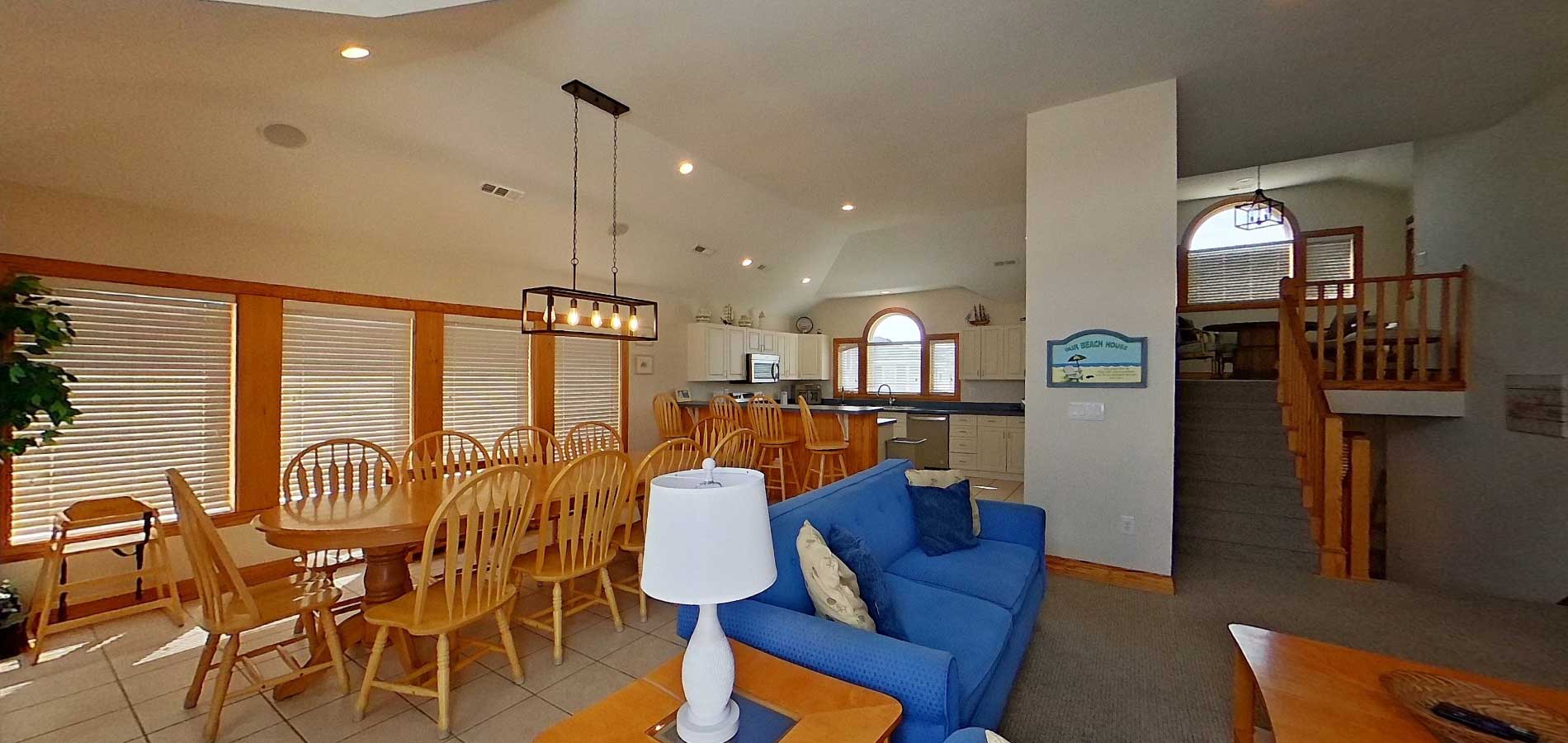
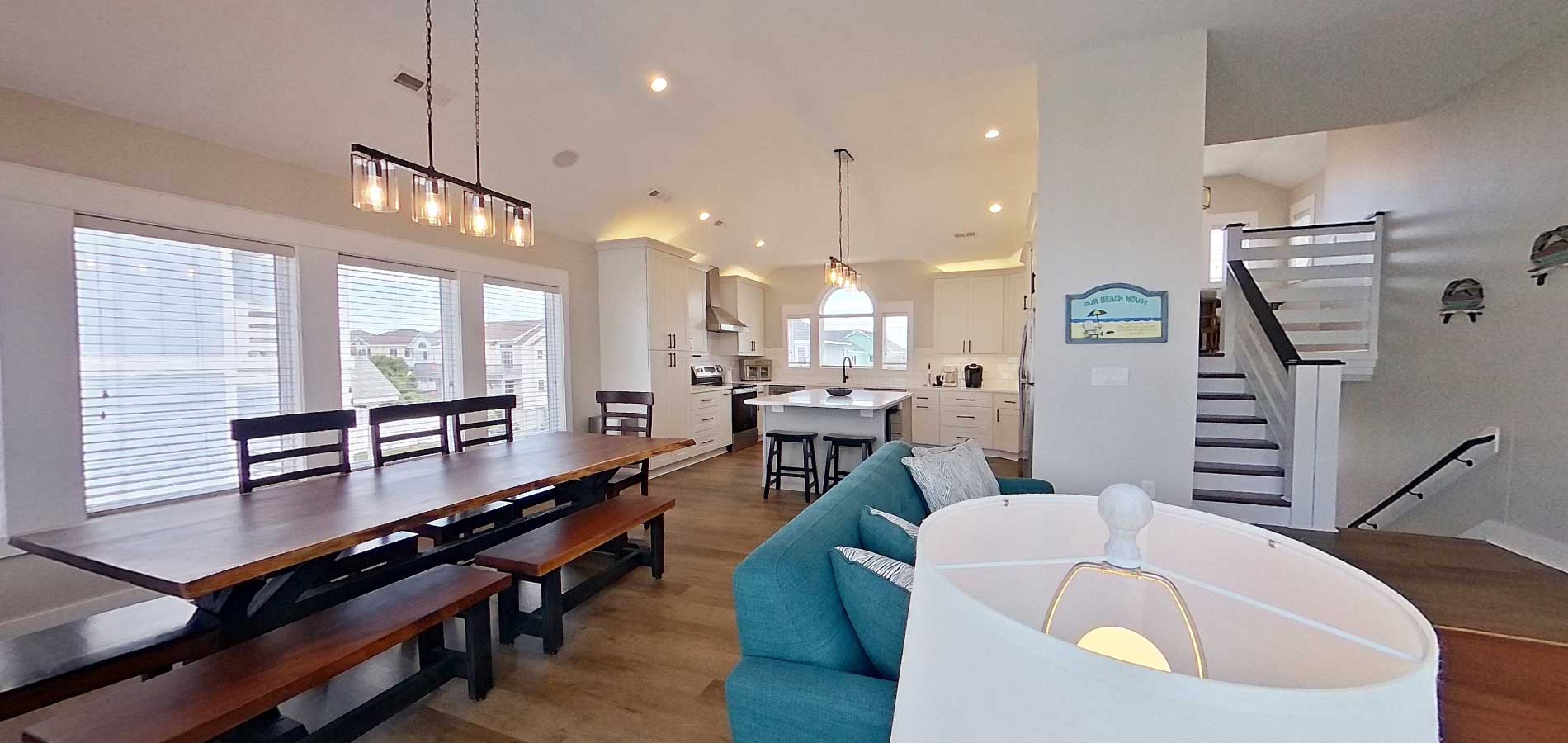
The old round oak table and tile floor gave this dining area a dated, closed-off feel. It’s now anchored by a live-edge farmhouse table, subway-tile backsplash, and a bright white kitchen with quartz counters – a layout built to serve large vacationing groups comfortably, and photograph well for bookings.
Worn carpet, an oak entertainment center, and dim lighting made this main living space feel its age. New hardwood flooring, a streamlined wall-mounted TV, and a teal sectional replaced it — the kind of first-impression room that immediately signals to arriving guests that this is a fully renewed property.
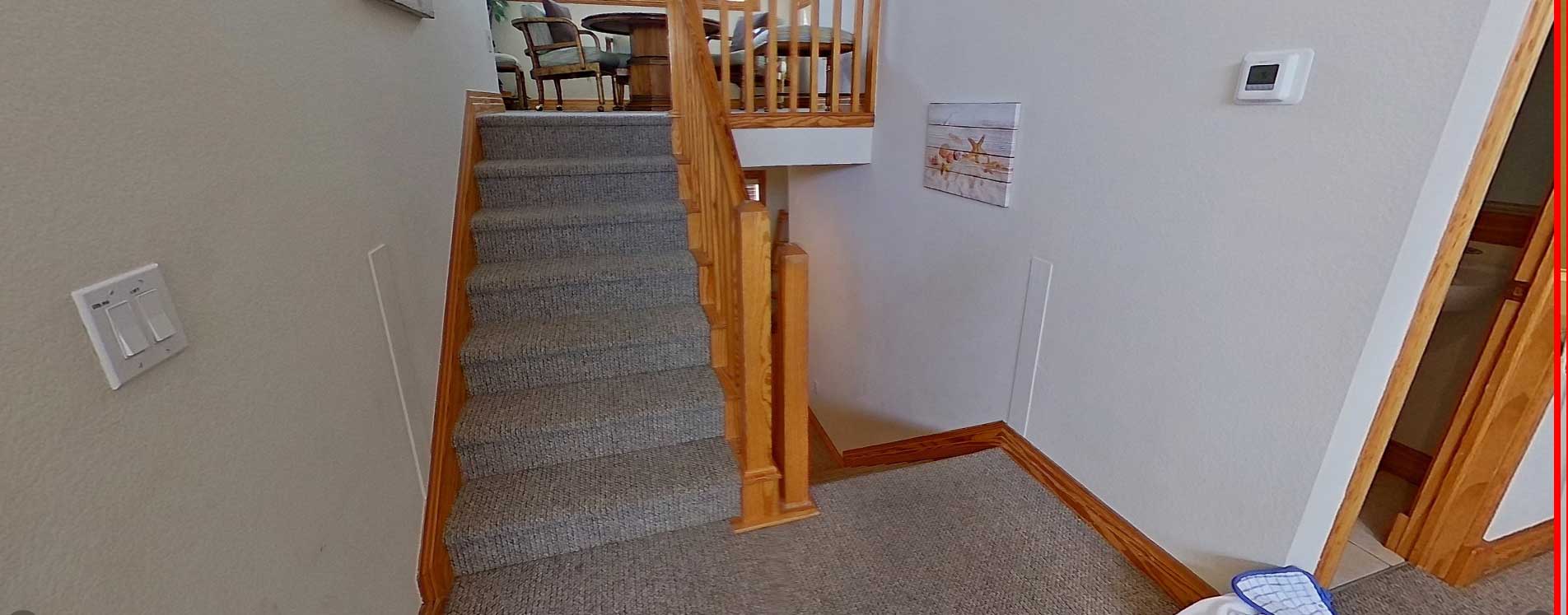
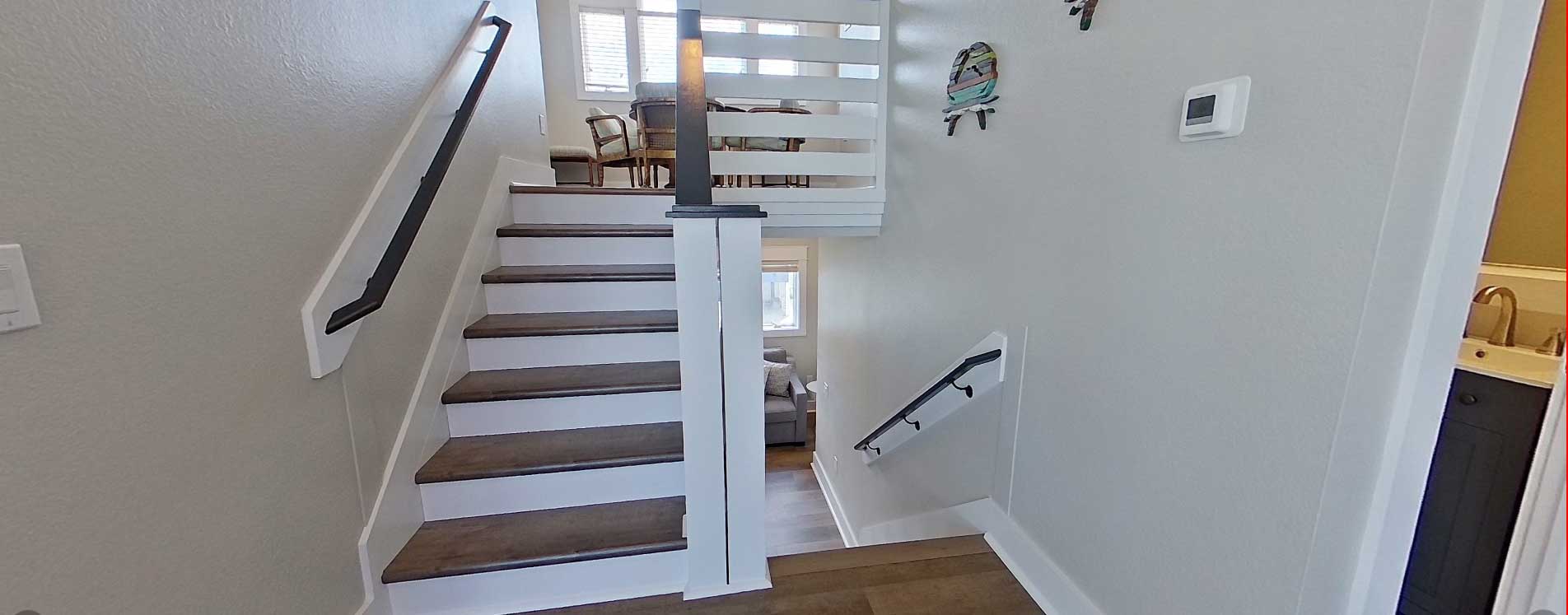
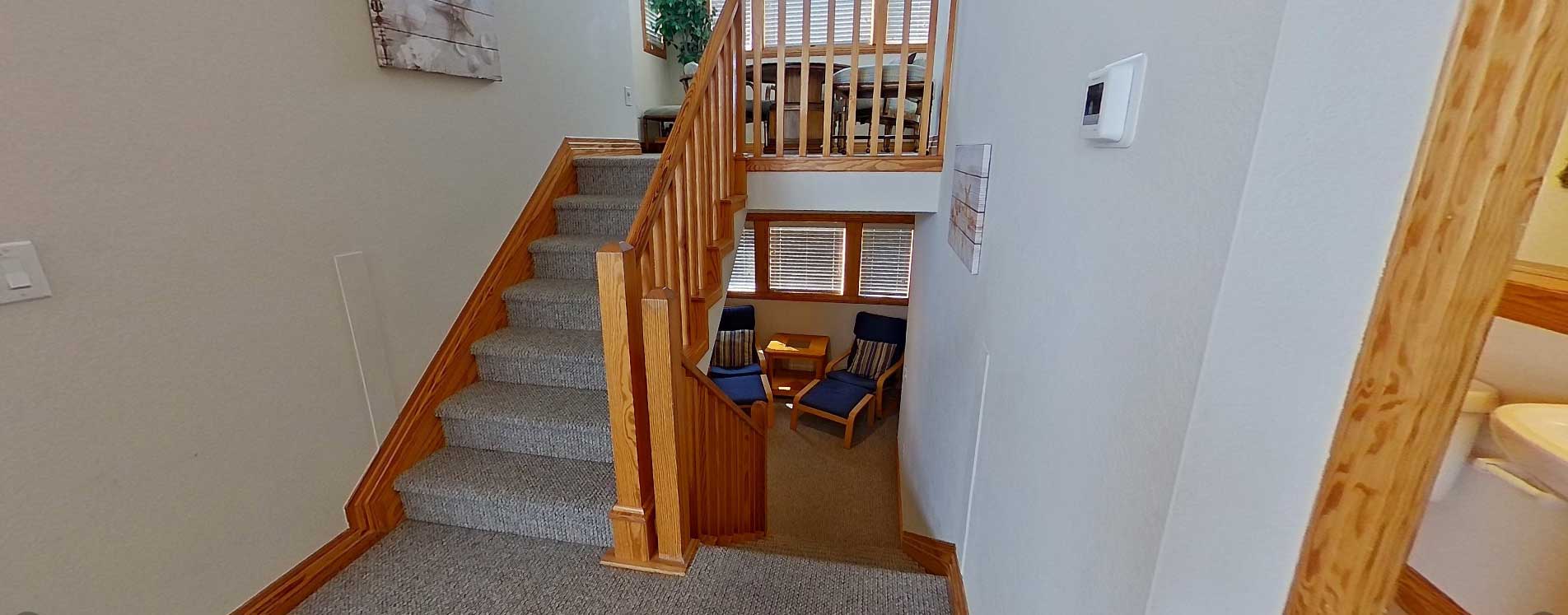
Carpeted treads, oak balusters, and heavy trim made this stairwell feel closed-in and dated. It was rebuilt with wide-plank hardwood, crisp white risers, and a sleek black handrail – a small architectural detail that, multiplied throughout the home, adds up to a completely different first impression on arrival.
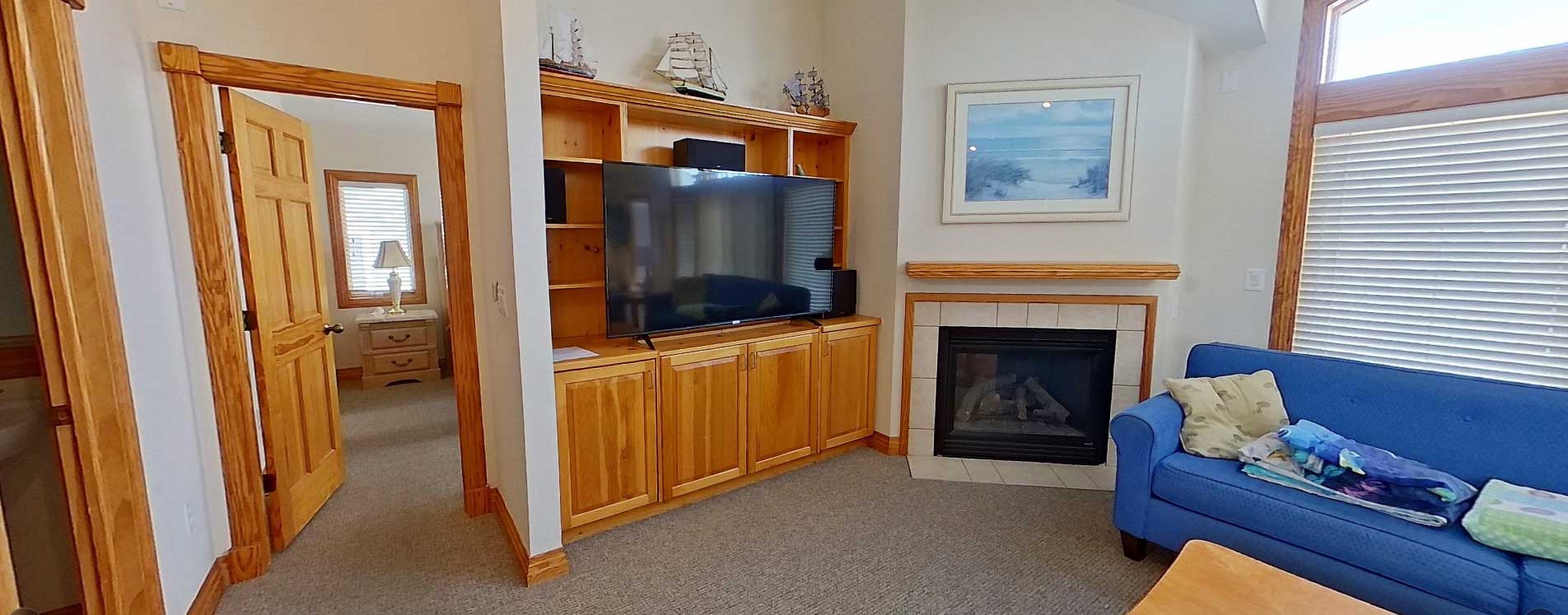
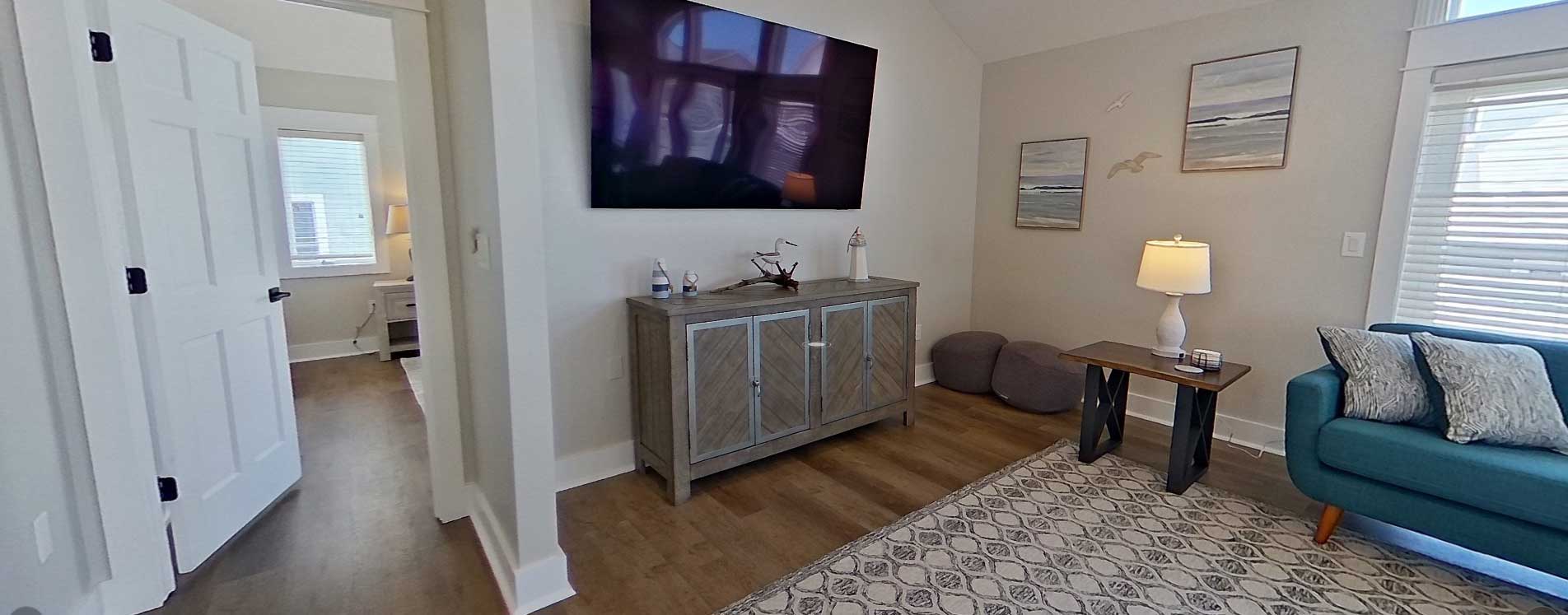
A carpeted fireplace nook with heavy oak built-ins once felt more like a leftover space than a destination. New flooring, a wall-mounted TV, and driftwood-inspired coastal styling transformed it into a bright, comfortable lounge — proof that even secondary rooms got the same full-renovation treatment as the main living areas.
Small improvements can be helpful, but they may not change how guests perceive the overall property. A new floor may look good, but if the kitchen, bathrooms, exterior, furnishings, and technology still feel dated, the home may continue to be judged as an older rental. A major renovation requires a larger investment, but it also creates the opportunity to change the property’s market position.
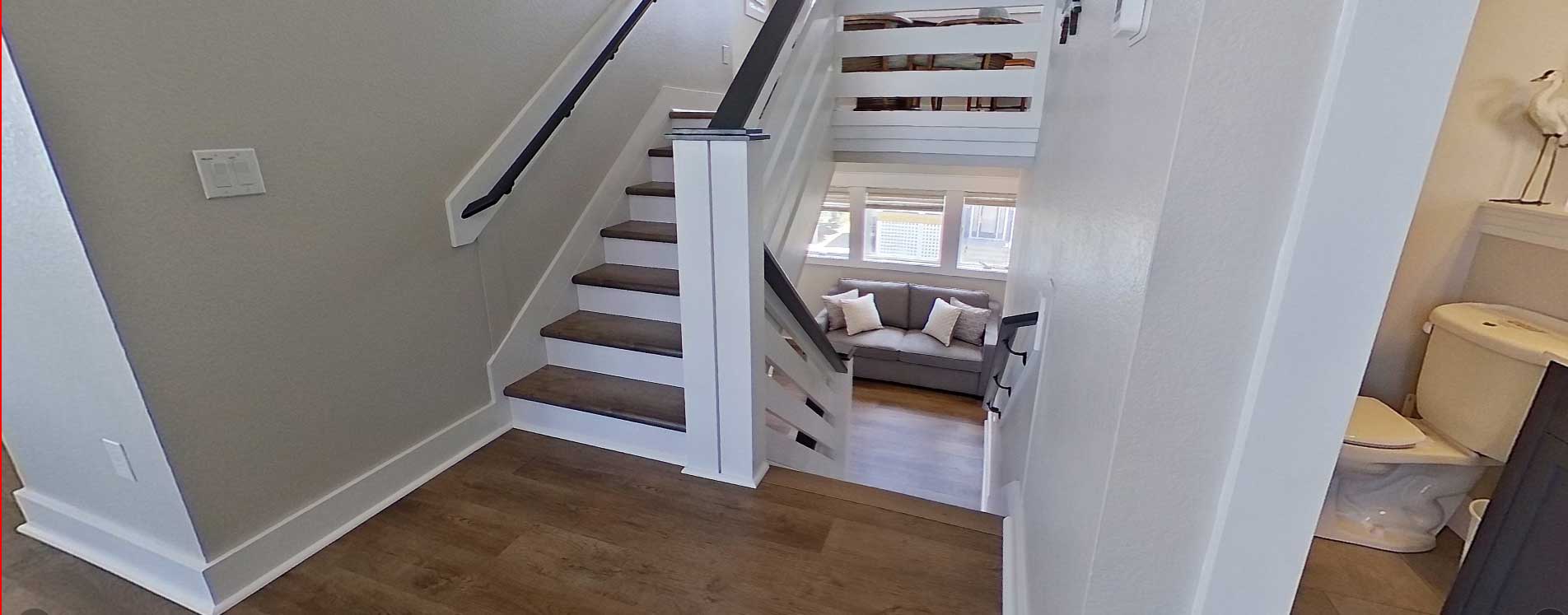
This second stairwell shows the renovation’s consistency: carpet and oak paneling were swapped for warm hardwood treads and clean white trim, opening a bright sightline into the living room below. It’s a reminder that North River Properties treated every transition space with the same standard, not just the showpiece rooms.
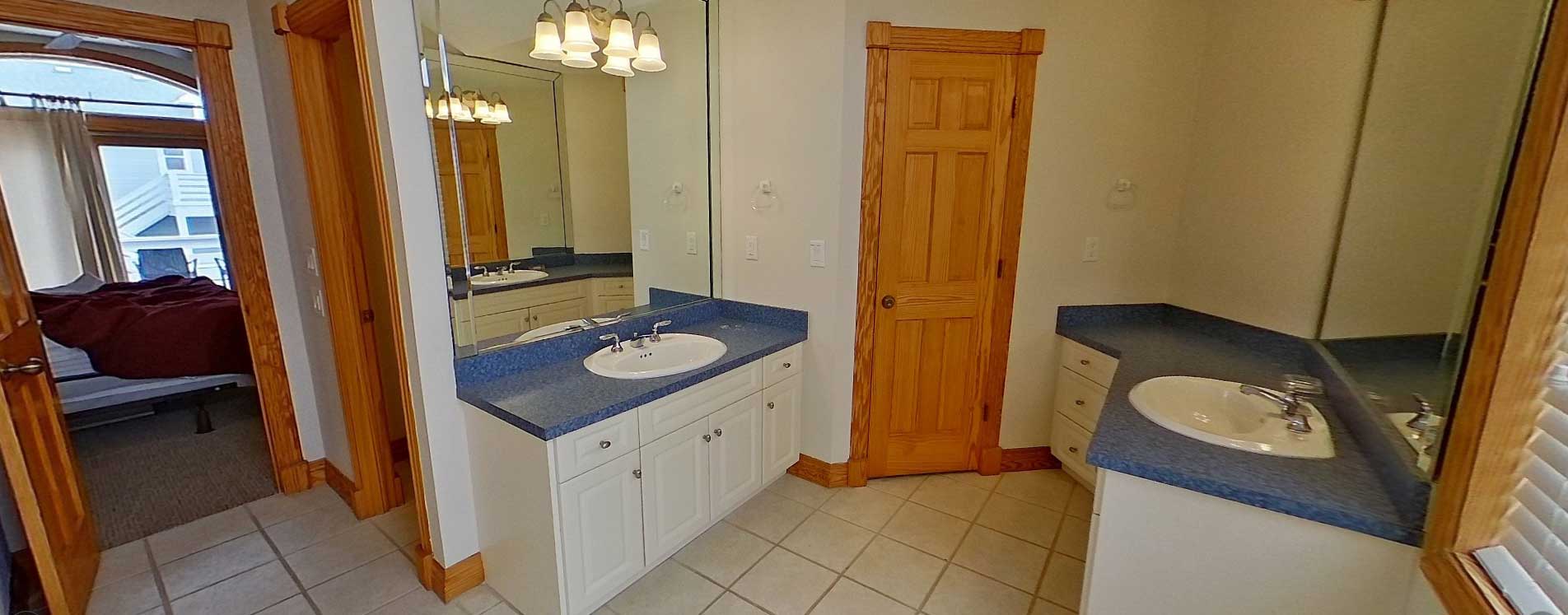
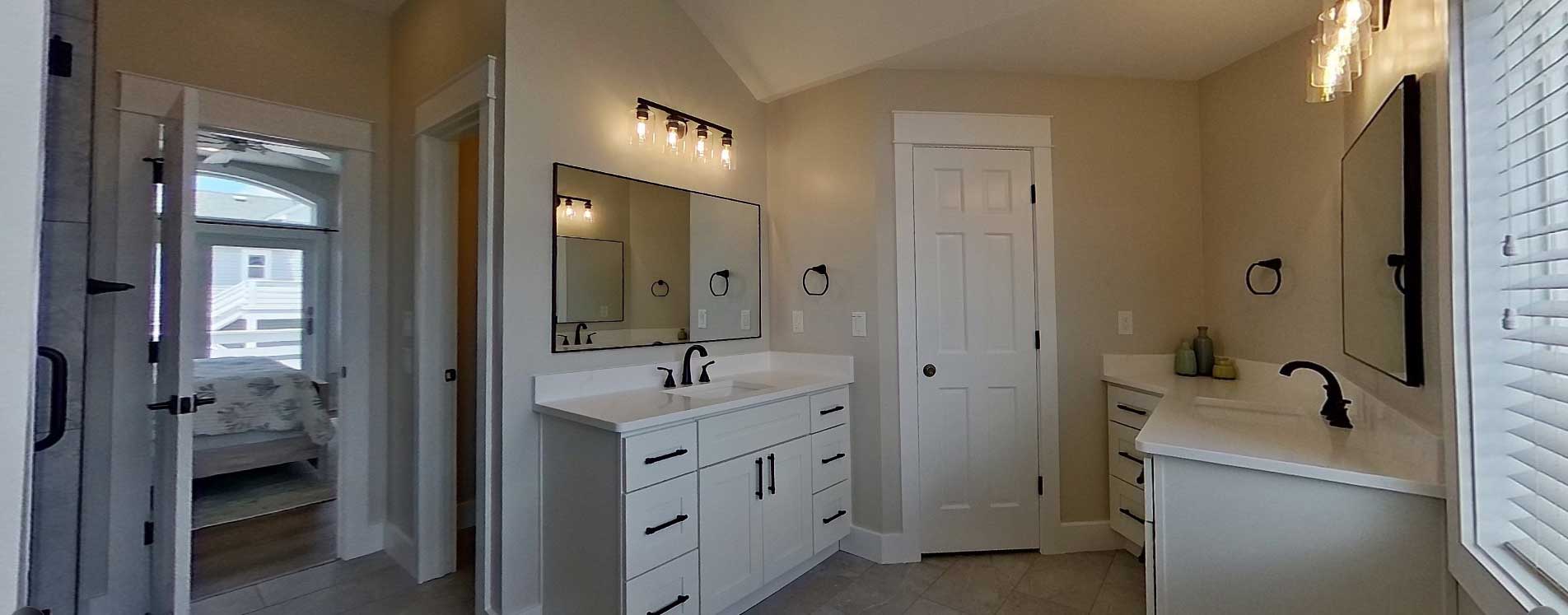
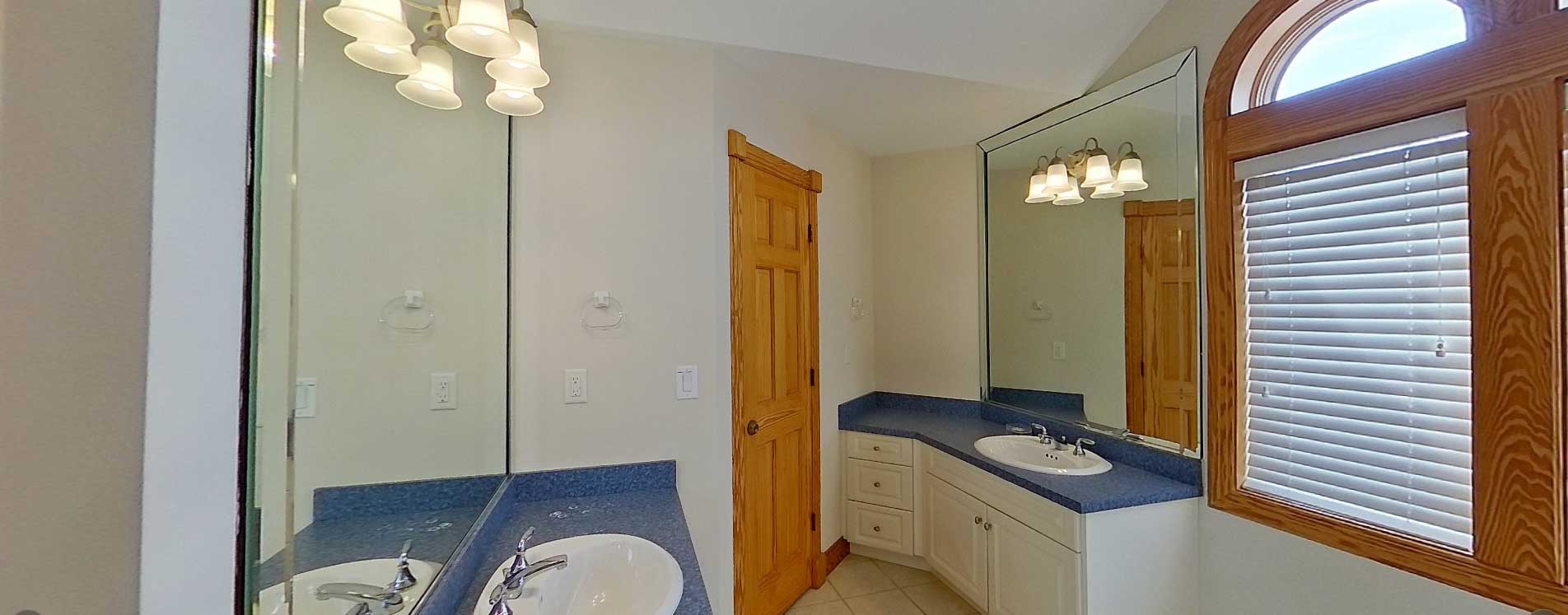
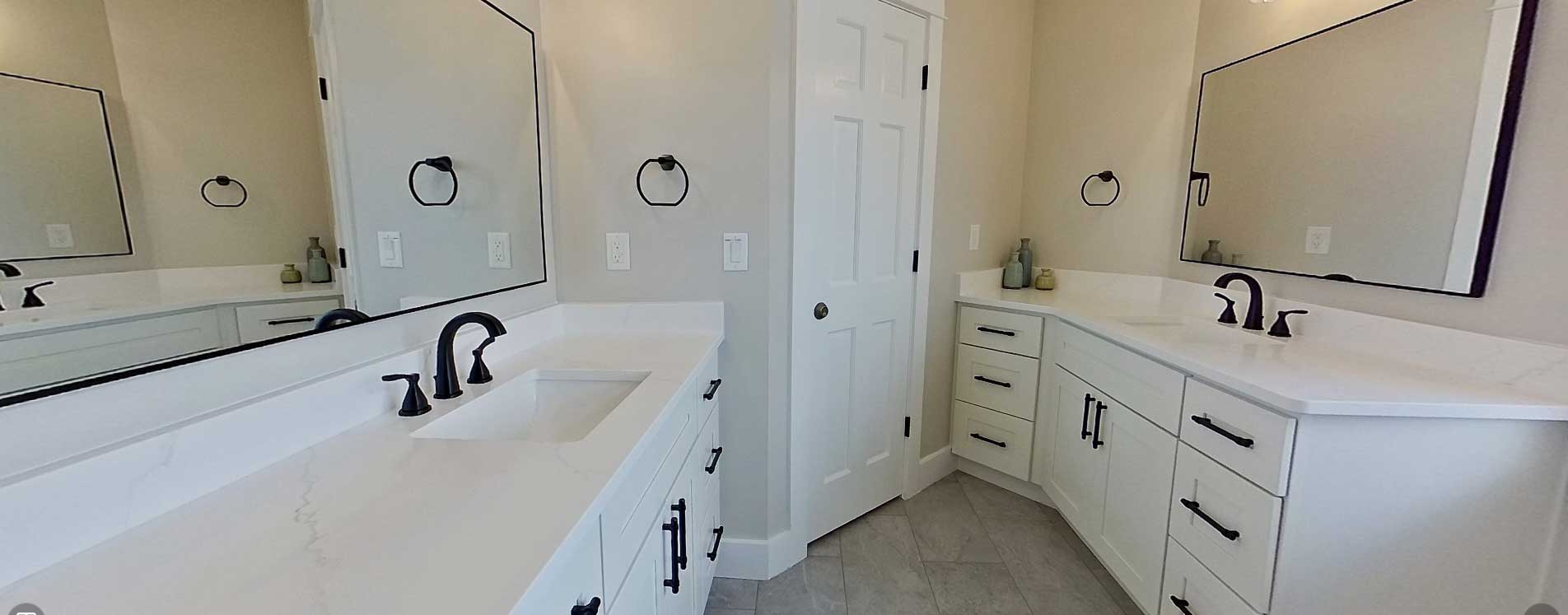
Blue laminate counters and oak cabinetry gave this vanity a dated, heavy feel. It’s now a bright double vanity in white shaker cabinets with quartz counters and matte black hardware — durable, easy-to-clean finishes chosen specifically to hold up to constant rental turnover without losing their like-new appearance.
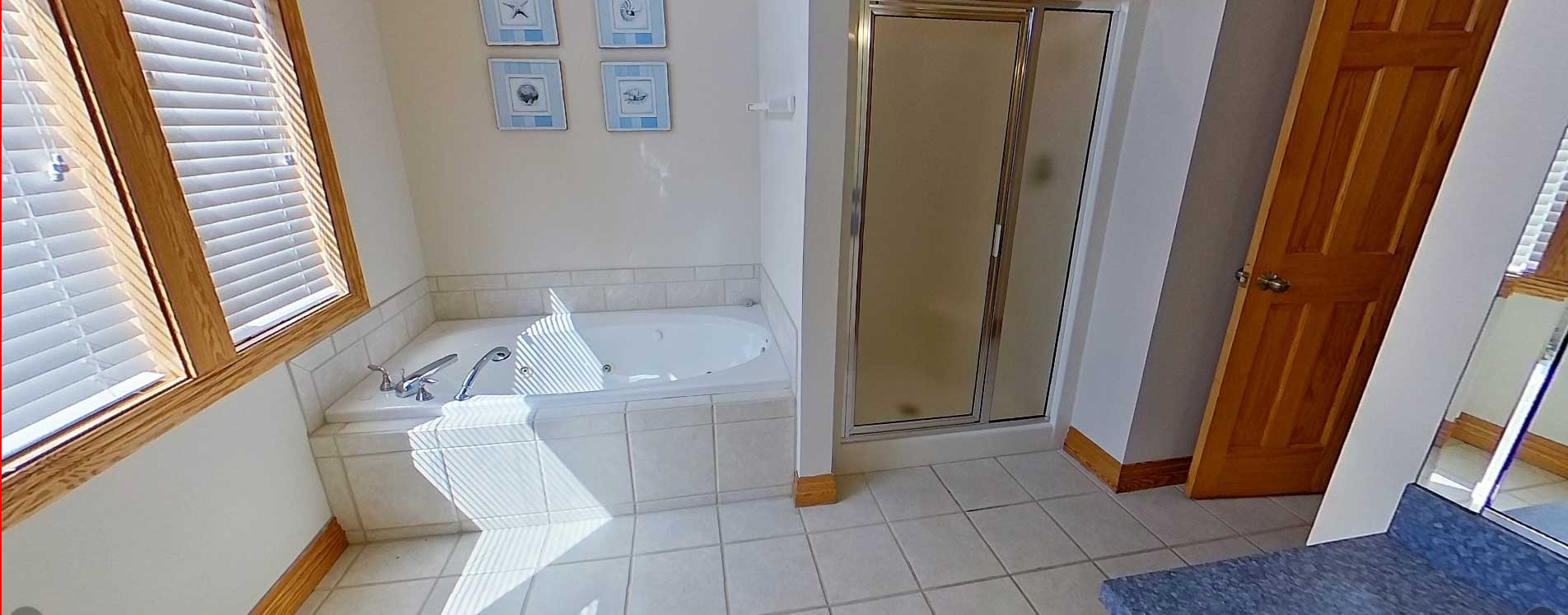
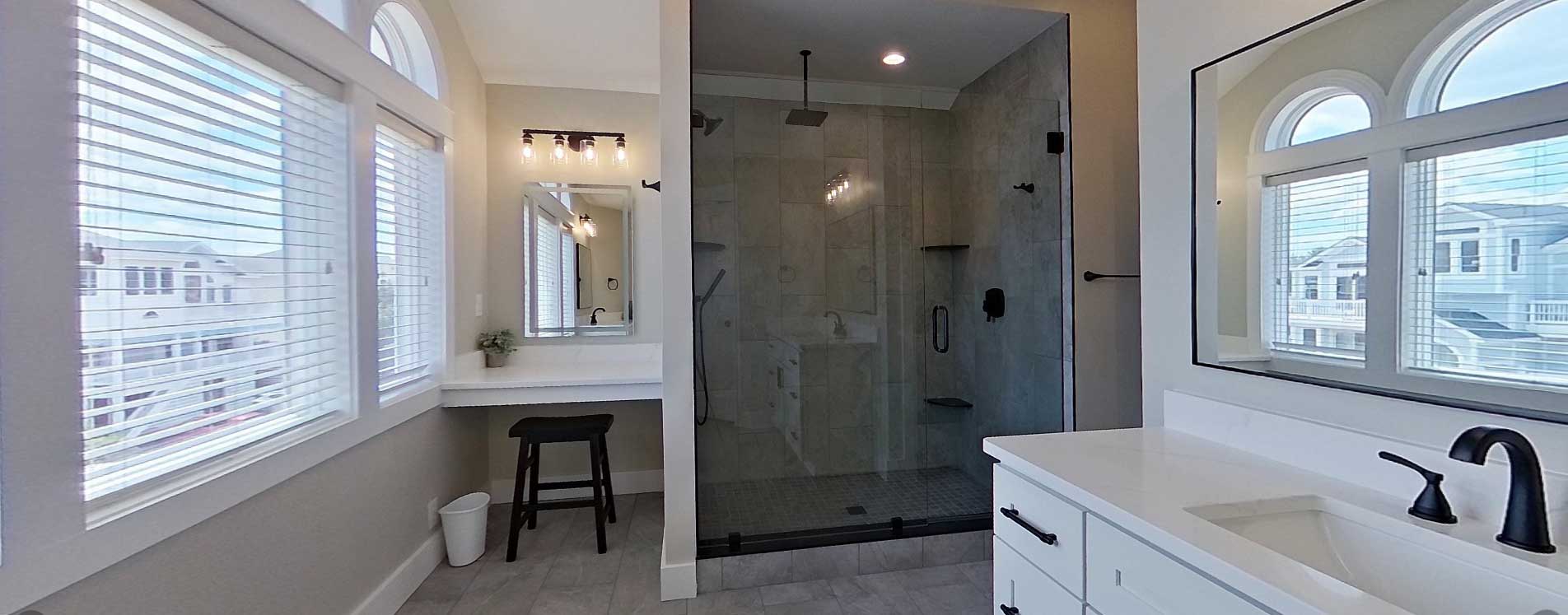
The old jacuzzi tub and sliding glass shower door were showing their age and limiting the room’s usable space. In their place: a spa-style walk-in shower with glass tile, framed by arched windows overlooking neighboring rooftops — a bathroom upgrade that reads as genuinely luxury, not just refreshed.
This awkward corner layout once paired blue laminate counters with tired oak trim. It’s now a bright, symmetrical double-vanity setup in soft white cabinetry with quartz countertops, matte black fixtures, and framed mirrors on both walls — a small footprint reworked into a genuinely functional, guest-friendly shared bath.
At 653 Juniper Berry, the owners chose transformation. The project included exterior siding and trim replacement, full exterior painting, kitchen renovation, bathroom renovation, interior finish upgrades, updated trim, redesigned interior features, improved furnishings, and modern technology infrastructure including a smart panel and Cat 6 wiring. The work exceeded $300,000 and resulted in a home that now presents as like new for the 2027 season.
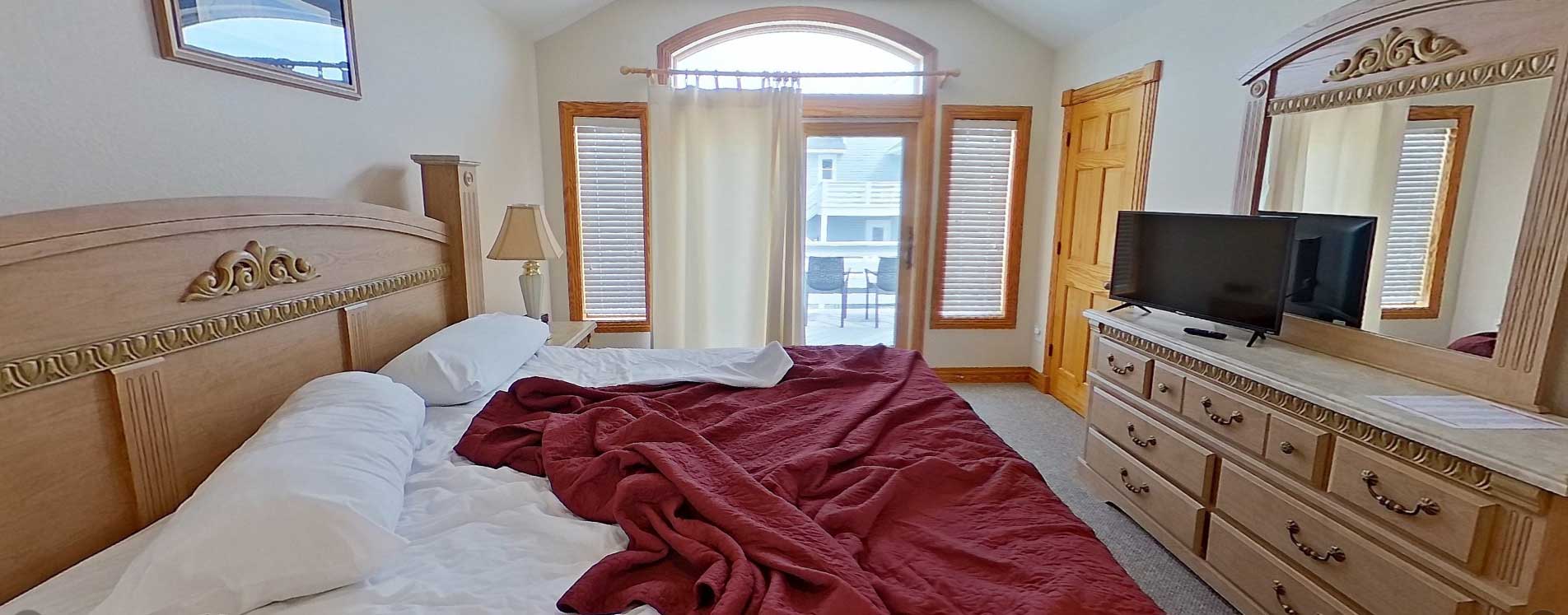
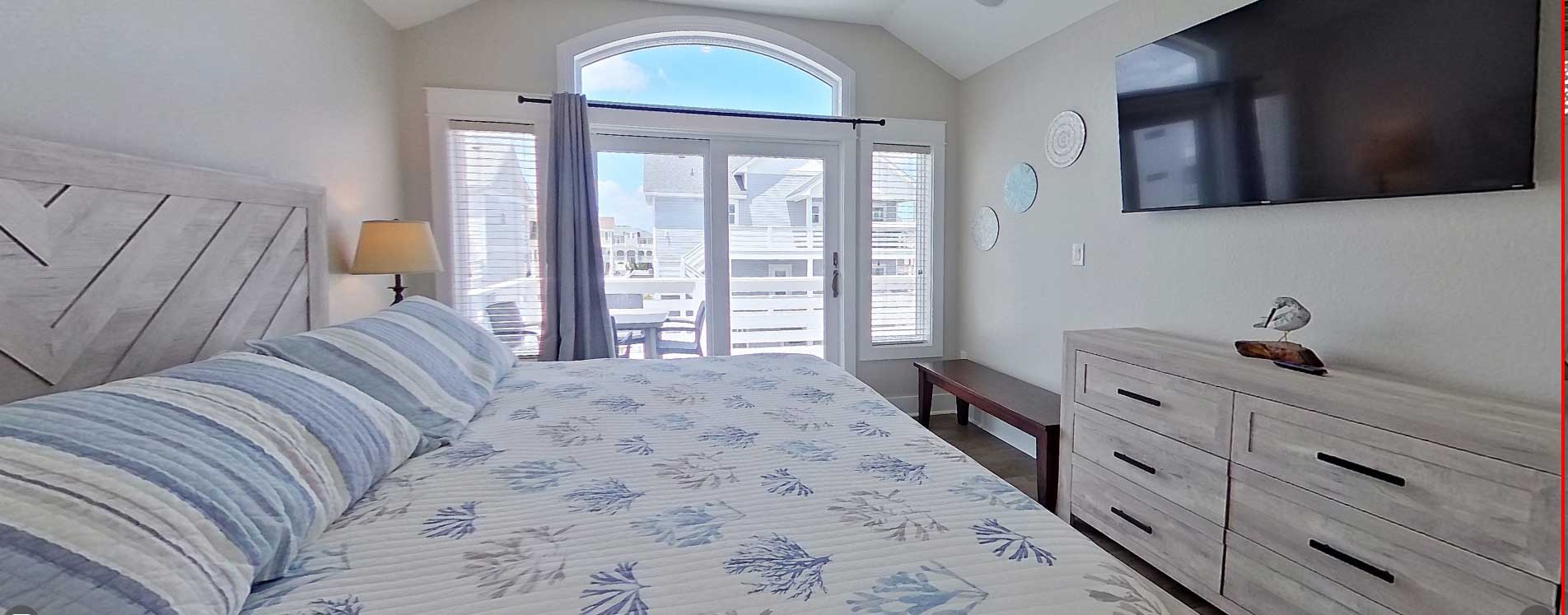
Heavy oak furniture and a mismatched red bedspread once gave this primary suite a dated, generic feel. It’s now dressed in a driftwood-finish bed frame, soft coastal linens, and a wall-mounted TV — a bedroom that finally matches the ocean-view balcony just outside its arched glass doors.
The bedroom’s arched window and vaulted ceiling were always strong architectural features, but heavy carved furniture weighed the room down. Lighter driftwood-toned pieces, updated flooring, and simplified wall decor let those original details shine — proof that renovation isn’t always about changing the room, but editing it.
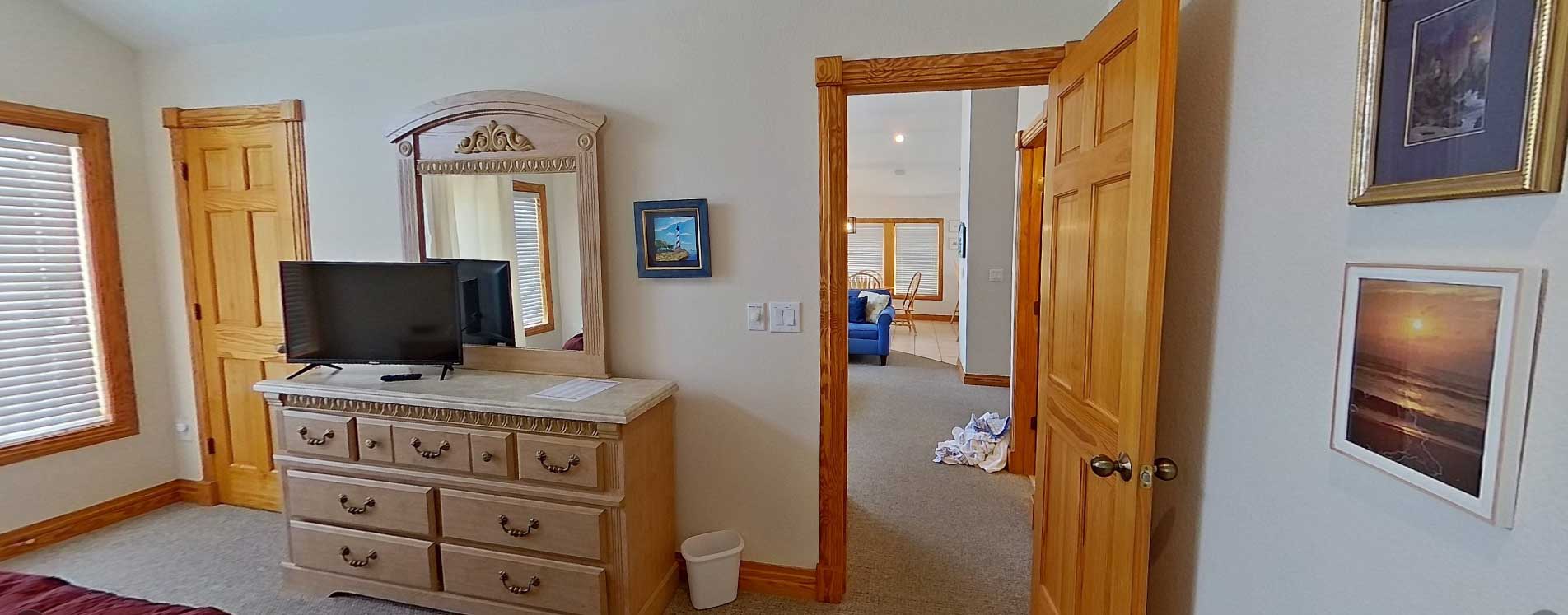
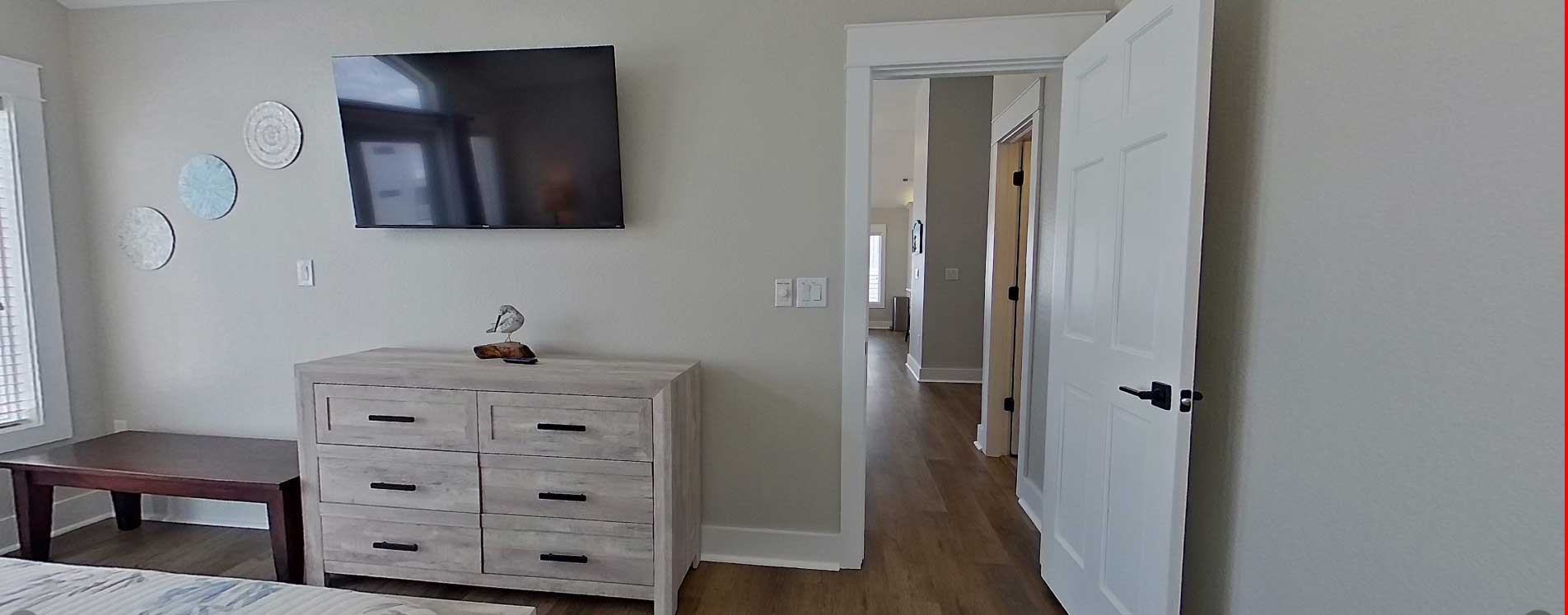
Ornate oak furniture and a cluttered dresser top made this room feel closed-in and dated. A slimmer dresser, mounted TV, and open sightline into the hallway replaced it — evidence that even secondary bedrooms received the full furniture and finish refresh, not just the primary suite.
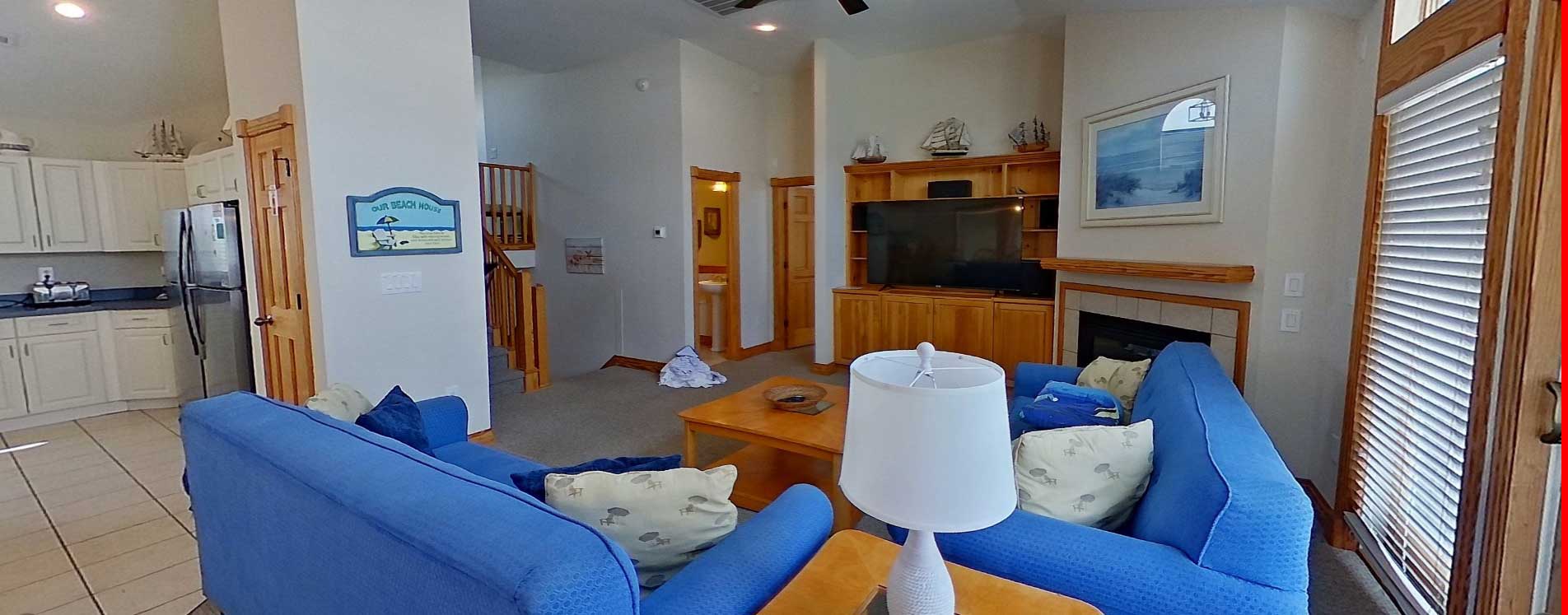
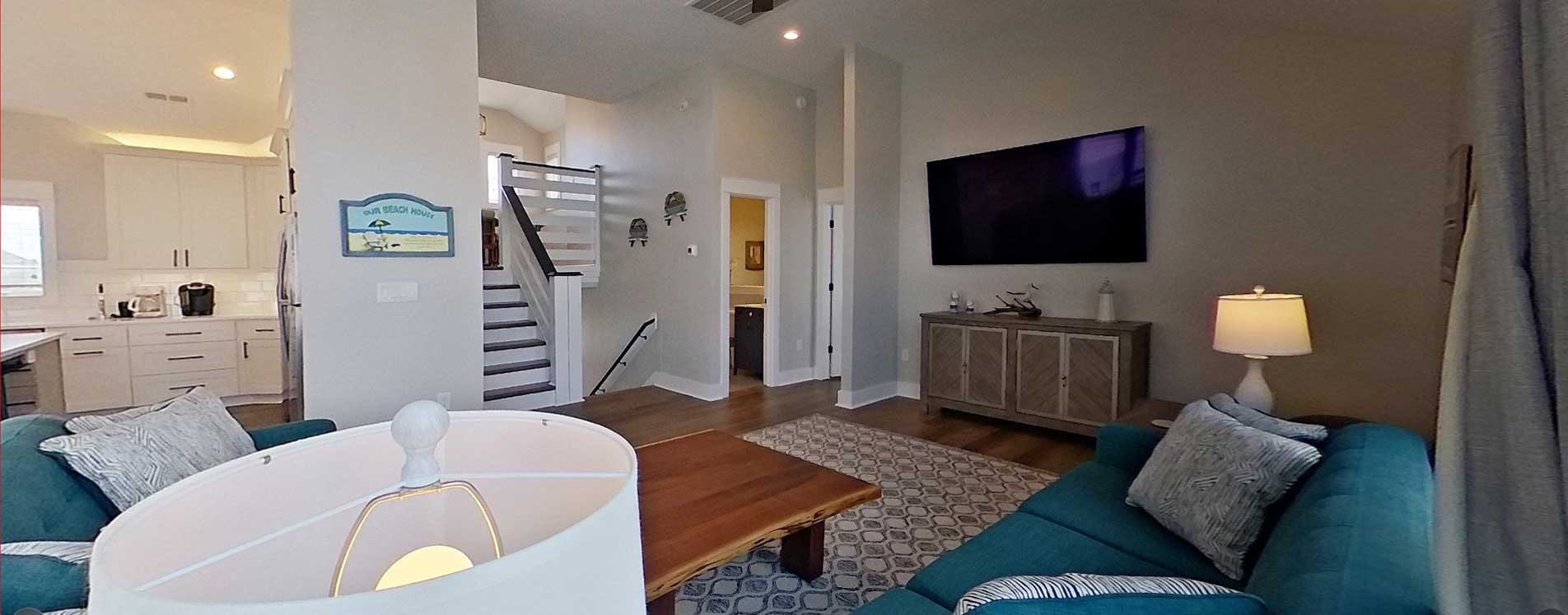
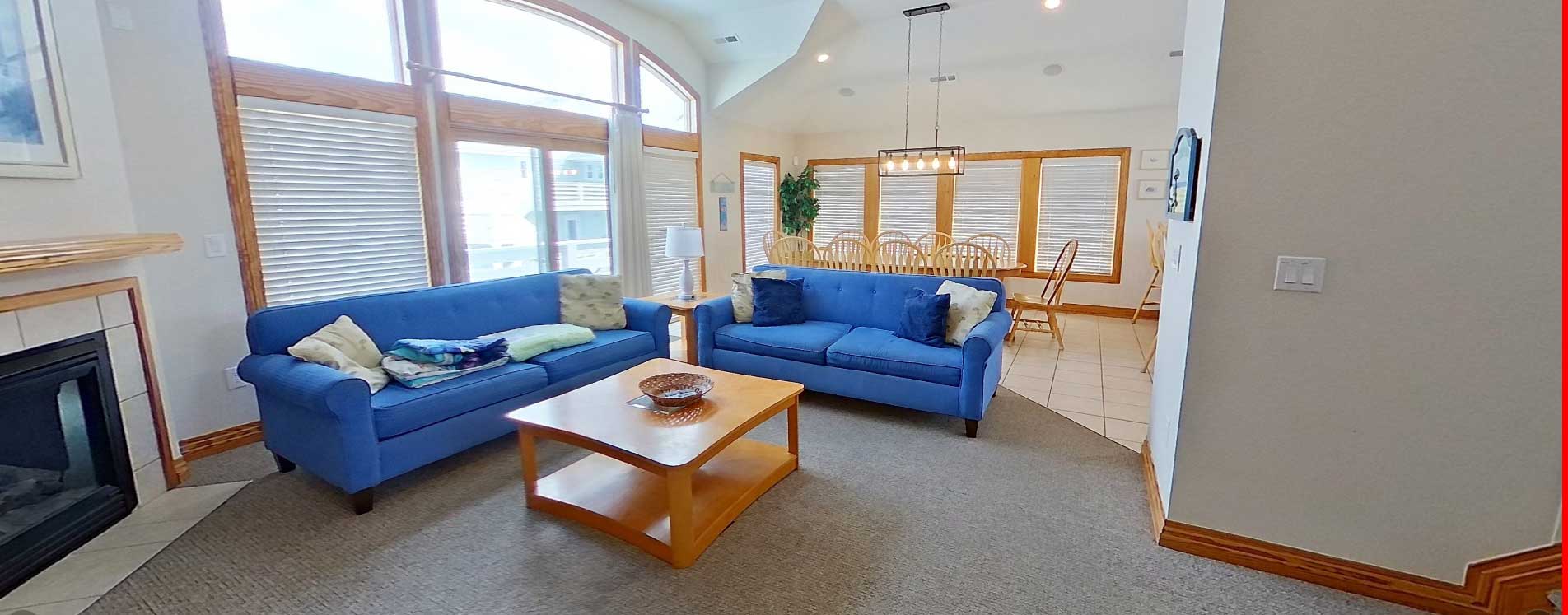
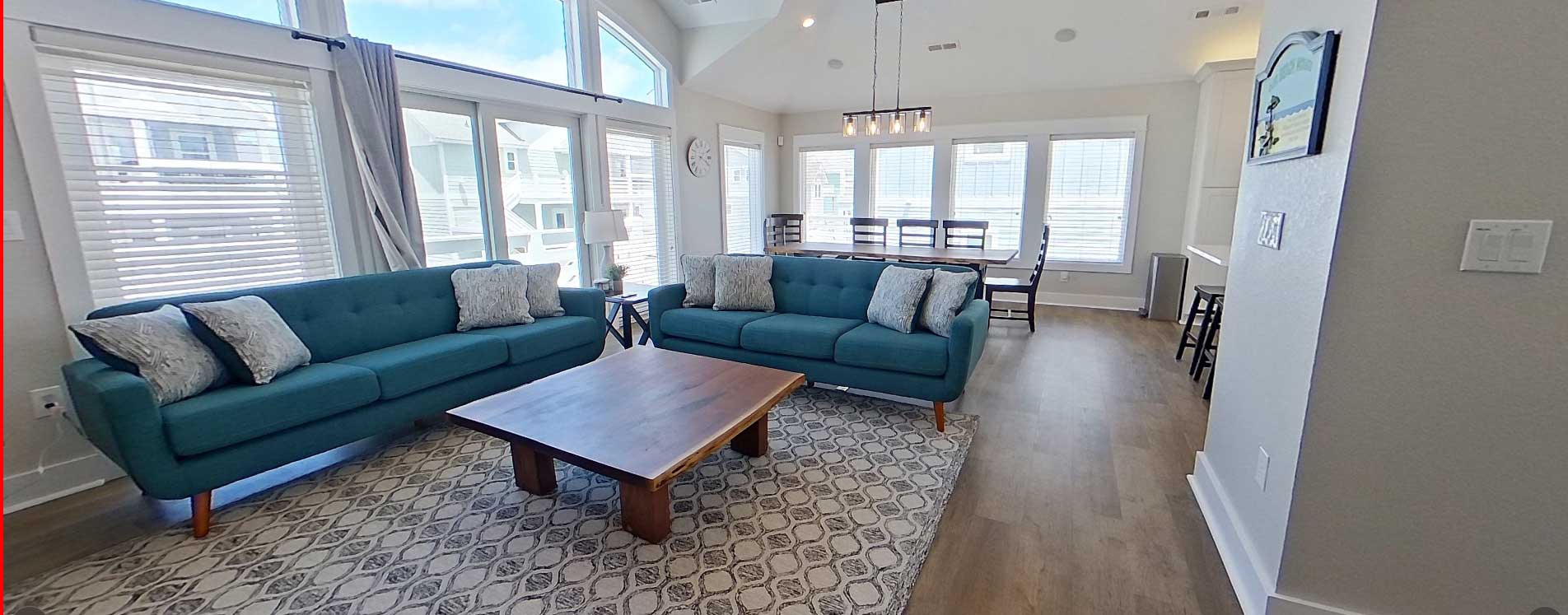
Blue upholstered sofas and tan tile once filled this main living space with a dated, generic rental feel. Teal mid-century sofas, a live-edge coffee table, and refinished hardwood floors replaced it — a living room designed to photograph beautifully and comfortably seat a full house of vacationing guests.
For other owners, the lesson is not that every house needs the same scope of renovation. The lesson is that renovation should be strategic. Owners should consider the age of the home, condition category, guest expectations, rental competition, future revenue potential, and the cost of continuing to delay meaningful improvements.
Older beach houses can remain valuable assets, but they require honest evaluation. Is the property still presenting at the level guests expect? Are online photos helping or hurting bookings? Are bathrooms and kitchens current? Does the exterior create confidence? Does the house function well for modern guests? Does the technology support today’s rental expectations? Is the property being maintained in a way that protects long-term value?
653 Juniper Berry shows that with the right plan, an older beach house can be renewed rather than replaced. It can move from average or below-average condition into a like-new presentation. It can become more appealing to guests, stronger in the rental market, and better protected as a long-term asset.
For Outer Banks homeowners, the message is encouraging: age does not have to define a beach house. With the right expertise, investment, and management strategy, a 20-year-old property can begin a new chapter.